


Exhaust Repair

Your vehicle's exhaust system is engineered to manage gases produced during combustion while controlling noise levels. A healthy exhaust system should produce a consistent, predictable sound signature. The muffler and resonator work together to muffle engine noise, creating the familiar hum or rumble you're used to hearing. When components begin to deteriorate, that carefully balanced acoustic environment changes.
The exhaust note you hear is actually a diagnostic tool. Mechanics across Launceston understand that subtle shifts in this sound often precede visible damage or mechanical failure. A change from a steady rumble to a rattling, hissing, or popping sound indicates that internal components are breaking down or airflow is being disrupted in ways that shouldn't be happening.
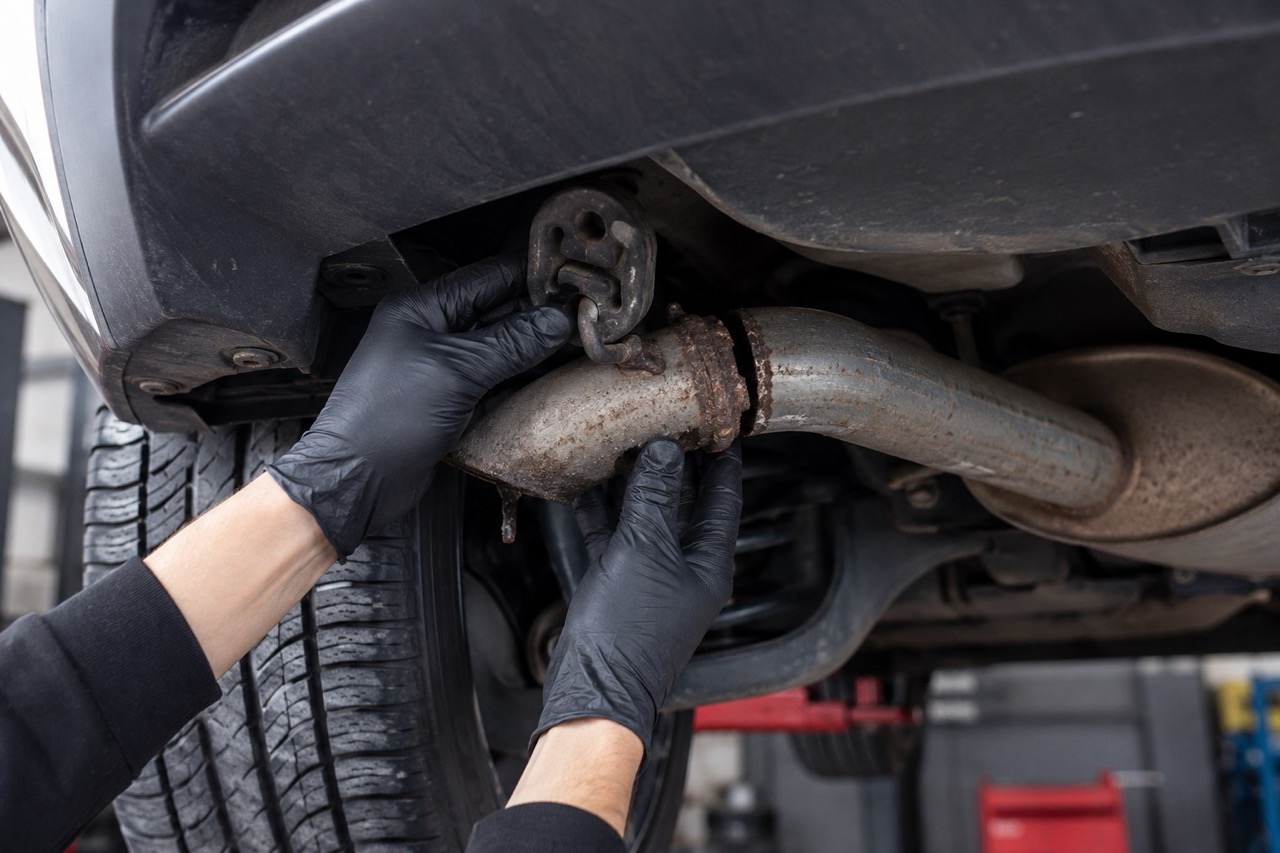
A deep metallic rattling usually points to internal baffle damage within the muffler. The baffles are designed to absorb and redirect sound waves, and when they corrode or separate from years of exposure to moisture and heat, they rattle against the muffler's outer shell with every acceleration. This is one of the most common complaints we hear from Launceston drivers, and it's rarely a sound that improves on its own.
A hissing or whistling sound often indicates a leak in the exhaust manifold or a crack in the pipe itself. When exhaust gases escape through cracks rather than flowing smoothly through the system, they create this distinctive high-pitched noise. Left unchecked, these leaks allow corrosive gases to escape near engine components and undercarriage, accelerating rust and corrosion in the harsh Tasmanian climate. A sudden, loud popping or backfiring suggests timing issues or a serious exhaust blockage that's forcing gases back through the engine rather than out through the pipe.
Living in Northern Tasmania means your exhaust system faces constant moisture exposure. Salt air near the coast, regular rain, and temperature fluctuations create the perfect environment for rust to develop inside pipes and mufflers. Unlike visible rust on bodywork, exhaust corrosion happens from the inside out, which is why you often hear it before you see it. Internal rust roughens the pipe surface, changes airflow patterns, and creates that telltale rumbling or hissing sound.
The earlier you catch these rust-related sounds, the better your options. A simple patch or replacement of a single section is far cheaper than waiting until the entire exhaust system has corroded through. At Berklee Exhaust & Automotive in Launceston, we see many vehicles where early detection has saved owners hundreds of dollars in unnecessary repairs. Ignoring that subtle change in sound can mean the difference between a straightforward repair and a complete system replacement.
Any noticeable change in your exhaust sound warrants a professional inspection. If that familiar rumble has become a rattle, if you're hearing hissing that wasn't there before, or if the note has simply shifted in pitch or volume, bring your vehicle in for a diagnostic check. Many drivers try to ignore these sounds, hoping they'll go away, but exhaust problems have a consistent pattern: they worsen over time and eventually become expensive failures.
A comprehensive exhaust inspection takes only minutes but can identify issues like cracked manifolds, failing mufflers, loose heat shields, and pipe damage before they cause secondary problems. At Berklee Exhaust & Automotive, our technicians listen carefully to your exhaust note, then inspect the entire system for rust, leaks, and structural damage. Catching these issues early—whether it's a small leak, a separated baffle, or the beginning stages of rust—keeps your vehicle running smoothly and safely on Launceston roads.

Designed & Developed by CJ Digital