


Exhaust Repair

Brake squealing is one of the most obvious warning signs that your braking system needs attention. While some modern vehicles have wear indicators that deliberately squeal to alert drivers, continuous or loud squealing often indicates that your brake pads are wearing thin and friction material is diminishing. This is especially concerning before a long regional drive where you'll rely heavily on consistent braking performance.
Grinding noises are even more serious than squealing. When you hear a grinding sound, it typically means the brake pads have worn completely through to the metal rotor underneath. This causes metal-to-metal contact and significantly reduces your braking power while damaging your rotors in the process. On winding country roads between Launceston and regional Tasmania, compromised braking is a serious safety risk that demands immediate professional inspection.
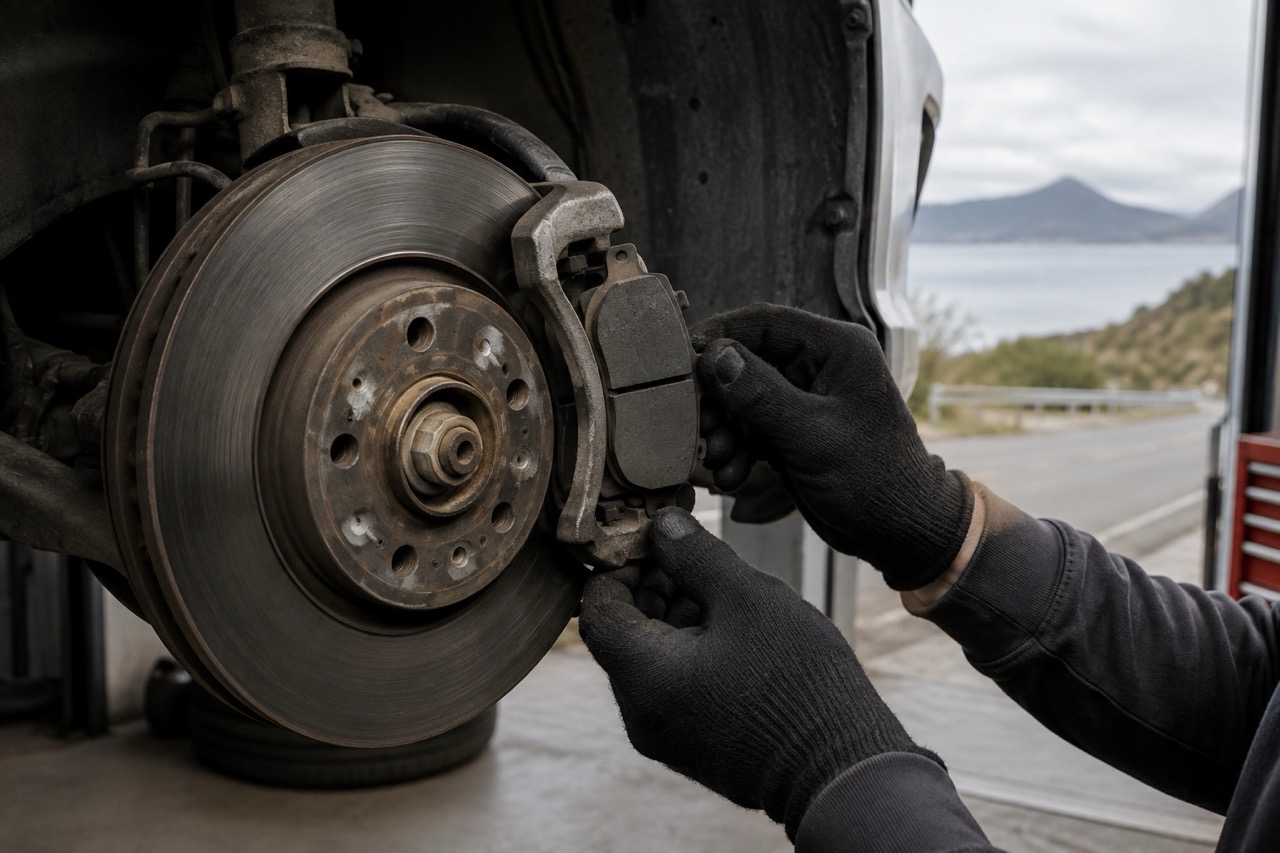
The feeling and responsiveness of your brake pedal is a critical diagnostic tool. A soft or spongy brake pedal that requires extra pressure to engage suggests air in your brake lines or low brake fluid levels. This is particularly dangerous because braking becomes unpredictable, and you may need significantly more distance to stop — a hazardous situation on unfamiliar country roads where you're adjusting to different road conditions and speeds.
If your pedal feels unresponsive or travels further than usual before engaging, have your braking system checked immediately by a professional. Before embarking on a long drive through regional Tasmania, your brake pedal should feel firm and responsive with consistent pressure. These changes in pedal feel often develop gradually, so regular checks during your routine vehicle maintenance help catch problems before they become dangerous.
Vibration or pulsing sensations that travel through your brake pedal when braking are typically signs of warped brake rotors. This common issue develops over time as rotors experience repeated heat cycles and uneven wear. While minor pulsing might seem like a minor inconvenience during local Launceston driving, it becomes a significant concern when you're navigating long stretches of regional roads where consistent, reliable braking is essential.
Warped rotors can also indicate uneven brake pad wear or issues with your brake calipers. The vibration you feel is the brake pad struggling to maintain consistent contact with an uneven rotor surface. On longer drives, especially through mountainous or winding terrain common in regional Tasmania, this inconsistency can compromise your ability to brake effectively in emergency situations. Professional brake inspection will identify whether you need rotor resurfacing, replacement, or caliper service.
Before any regional road trip, perform a simple visual brake inspection. Look at your brake pads through the wheel spokes — they should have at least a quarter-inch of friction material visible. Check your driveway or parking area for any fluid leaks underneath your vehicle, particularly reddish brake fluid which indicates a serious leak. These quick checks take minutes but provide valuable peace of mind before long drives where you'll be far from your regular mechanic.
Don't ignore warning lights on your dashboard either. A brake warning light or ABS indicator demands immediate professional attention before any extended driving. Berklee Exhaust & Automotive in Launceston offers comprehensive brake inspections and vehicle checks specifically designed for drivers preparing for long journeys. Having a qualified mechanic assess your complete braking system — pads, rotors, calipers, lines, and fluid — ensures you're genuinely safe for whatever regional Tasmania roads you're tackling.

Designed & Developed by CJ Digital